International Financial Reporting Standards (IFRS) & Updates
Stay updated about International Financial Reporting Standards (ifrs) that set common rules so that financial statements can be consistent, transparent, and comparable around the world!
Course content
Introduction
In today's highly integrated global economy, financial transparency and cross-border comparability are no longer optional—they are strict commercial prerequisites. As regulatory frameworks evolve, senior accountants, corporate auditors, and finance leaders face intense pressure to interpret and apply complex international financial reporting standards accurately. Sub-optimal financial statements carry steep penalties, compromised audit opinions, and diminished investor trust.
This intensive IFRS Certification Course bridges the gap between theoretical accounting guidelines and high-stakes corporate compliance. Designed as a comprehensive International Financial Reporting Standards course, this program equips participants with the analytical frameworks needed to navigate the ever-shifting landscape of global financial reporting standards. Whether you are aiming to secure an elite IFRS certification or want to master the latest IFRS standards and updates, this training provides actionable strategies to optimize your financial architectures, mitigate reporting risks, and lead corporate compliance initiatives with absolute certainty.
Course Objectives
By completing this practical masterclass, participants will achieve the following critical milestones:
Navigate the Regulatory Matrix: Deconstruct the technical standard-setting process established by the International Financial Reporting Standards Foundation and accurately catalog all currently active mandates.
Integrate Emerging Updates: Evaluate the structural impact of recent IFRS updates on corporate balance sheets, operational models, and industry-specific reporting pipelines.
Master Complex Disclosures: Structure flawless presentations and meet minimum disclosure requirements for the statement of financial position, statement of comprehensive income, statement of changes in owners' equity, and statement of cash flows in strict compliance with IAS 1.
Execute Asset & Liability Accounting: Correctly recognize, measure, and audit transactions involving current assets, long-term liabilities, complex revenue recognition streams, and operational expenditures.
Apply Advanced Professional Judgment: Leverage concrete IFRS principles to resolve non-recurrent, high-stakes corporate transactions and ambiguous business scenarios with absolute precision.
Course Outlines (5-Day Masterclass)
Day 1: Introduction to IFRS Frameworks & Financial Statement Presentation
The Global Architecture: Breaking down the foundational IFRS definition, core meaning, and the strategic importance of financial reporting standards in international capital markets.
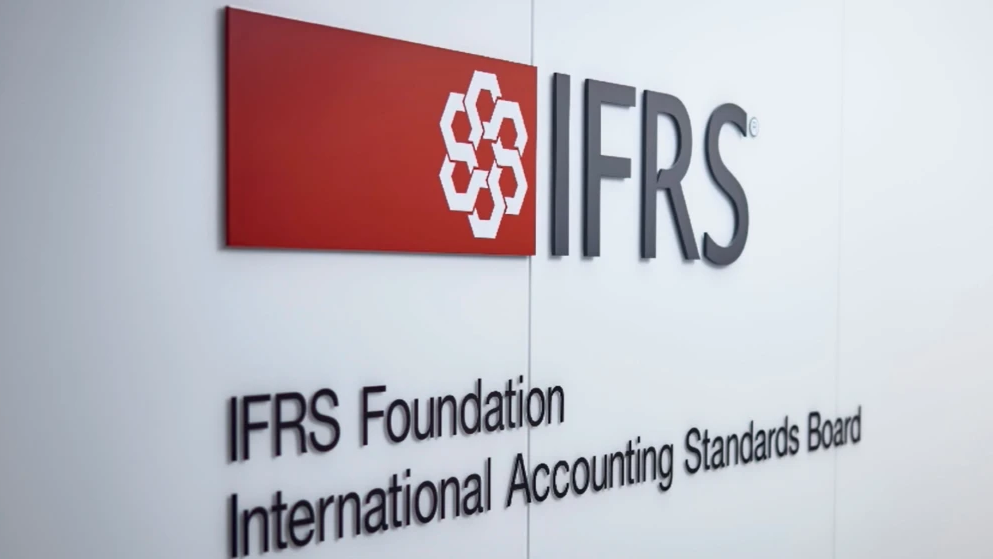
The Governance Blueprint: An inside look at the structural mechanics of the IFRS Foundation and the standard-setting pipeline.
Mastering IAS 1 Execution: Constructing an institutional-grade statement of financial position.
Structural Classification: Differentiating between current vs. non-current assets and liabilities with absolute clarity.
The Compliance Boundaries: Regulatory guidelines, restrictions, and prohibitions regarding the offsetting of corporate assets and liabilities.
Income Architecture: Structuring the income statement under IAS 1 and parsing revenue/expenditure classifications by nature vs. function.
Equities & Comprehensive Income: Dissecting stockholders' equity components and capturing hidden movements within Other Comprehensive Income (OCI).
Day 2: Advanced Accounting for Current Assets & Operating Liabilities
Financial Instruments (IFRS 9): Managing cash, equivalents, and basic financial instruments under global compliance standards.
Optimizing Receivables: Tactical handling of accounts receivable portfolios, bad debt provisions, and strict valuation metrics.
Monetizing Liquidity Pipelines: Analyzing the financial reporting realities of pledging, assigning, and factoring trade receivables.
Inventory Valuations (IAS 2): Defining inventory thresholds, raw material tracking, and net realizable value (NRV) assessments.
Cost Allocation Frameworks: Practical application of cost-flow assumptions (FIFO, Weighted Average) and managing subsequent measurement adjustments.
Day 3: Long-Term Asset Architecture & Contigency Risk Management
Fixed Asset Management (IAS 16): Recognition and initial measurement criteria for Property, Plant, and Equipment (PP&E).
Valuation Modeling: Executing a strict comparative analysis between the Cost Model and the Revaluation Model for long-term assets.
Specialized Assets (IAS 38 & IAS 40): Capturing the commercial value of intangible assets and treating investment properties accurately.
Impairment & Decommissioning: Calculating asset impairment thresholds under stress conditions and accounting for long-term environmental or structural decommissioning costs.
Mitigating Balance Sheet Risk (IAS 37): A technical blueprint for calculating provisions, evaluating contingent liabilities, and disclosing contingent assets without compromising audit safety.
Day 4: Complex Investment Portfolios & Modern Revenue Recognition
Strategic Securities (IFRS 9): Advanced classification, initial recognition, and subsequent impairment testing of corporate investment securities.
The Revenue Revolution (IFRS 15): Deconstructing the mandatory 5-step model for revenue derived from customer contracts.
Contract Architecture: Identifying enforceable contracts, separating distinct performance obligations, and calculating variable transaction prices.
Recognition Execution: Determining optimal revenue recognition timelines—evaluating satisfaction of performance obligations over time versus at a specific point in time.
Day 5: IFRS 16 Leases & Transition Management
The Structural Shift: Navigating the legacy transition from IAS 17 to IFRS 16 and analyzing its massive impact on corporate debt ratios.
Deconstructing Leases: Identifying hidden lease arrangements and separating contract components cleanly.
Dual-Perspective Accounting: Hard-coded financial entries for both lessees (Right-of-Use assets) and lessors.
Regulatory Safe Harbors: Applying legal exemptions for short-term assets and low-value lease items.
The Transition Roadmap: Tactical deployment strategies, effective dates, and retrospective restatement workflows for corporate implementation.
Why Attend This Course: Wins & Losses!
What You Win:
Accelerated Executive Mobility: Earning an advanced credential in international financial reporting positions you for senior roles such as corporate controller, chief auditor, finance director, and global accounting manager.
Unfair Competitive Edge: Dominate technical corporate interviews and corporate selection processes by possessing verifiable mastery over complex global accounting metrics.
Immediate Operational Capability: Walk away with an actionable toolkit, real-world case templates, and the practical confidence to manage multi-currency consolidations and international compliance audits from day one.
Future-Proof Compliance: Shield your organization from restatements and regulatory penalties by staying ahead of the curve on the latest IFRS updates.
Institutional Authority: Elevate your status within your corporate structure as the go-to expert for high-stakes financial advisory and board-level reporting.
What You Lose:
Career Stagnation: Eliminate the risk of being passed over for promotions due to a lack of familiarity with international frameworks.
Reactive Audit Panic: Say goodbye to stressful year-end close cycles and unexpected audit findings caused by outdated accounting methods.
Balance Sheet Blindspots: Remove the costly reporting errors, misclassified assets, and compliance gaps that drain corporate valuations.
Conclusion
In the modern corporate ecosystem, financial reporting is no longer just about tracking historical data—it is a strategic discipline that directly impacts corporate reputation and investor capital. Relying on outdated regional frameworks or entry-level accounting knowledge is a liability that limits both personal career growth and organizational agility.
The International Financial Reporting Standards (IFRS) & Updates Course offers a practical, results-driven learning environment tailored to the realities of modern corporate finance. This isn't a passive textbook lecture; it is an intensive training ground designed to permanently upgrade your technical capacity, optimize corporate compliance pipelines, and give you the professional distinction that only the best IFRS certification preparation can provide. Secure your seat today and take command of your global finance career.
FAQ
What are International Financial Reporting Standards (IFRS), and why do they matter?
International Financial Reporting Standards (IFRS) are a unified set of global accounting rules established by the International Accounting Standards Board (IASB). The ultimate purpose of these global financial reporting standards is to ensure that corporate financial statements across different countries are transparent, consistent, accurate, and fully comparable. By implementing a standardized IFRS definition and meaning globally, international markets can evaluate corporate performance seamlessly, reducing risks for global investors and streamlining cross-border capital allocation.
What is IFRS certification, and how does this course help me get certified?
An IFRS certification is an internationally recognized professional credential that validates an accountant or finance professional's absolute mastery over global reporting mandates. If you are wondering how to get IFRS certification, the journey requires a combination of structured technical training and passing specialized standard examinations (such as those offered by global professional accounting bodies). This training program serves as an elite preparation resource, delivering the exact quantitative workflows, real-world case studies, and compliance insights required to clear rigorous technical evaluations and excel in corporate implementation roles.
What core financial reporting standards are covered in this intensive program?
This comprehensive training program addresses the most critical pillars of global financial accounting. Key frameworks covered in depth include IAS 1 (Presentation of Financial Statements), IAS 2 (Inventory Valuation metrics), IAS 16 (Property, Plant, and Equipment metrics), IAS 37 (Provisions, Contingent Liabilities, and Contingent Assets), IFRS 9 (Financial Instruments and Investment Securities), IFRS 15 (The 5-Step Model for Revenue from Contracts with Customers), and IFRS 16 (Modern Lease Accounting Frameworks).
Upcoming sessions
| City | Country | Date & time | Price | |
|---|---|---|---|---|
| Istanbul | Turkey | To be announced | £4,200.00 | Register now |
| Amman | Jordan | To be announced | £4,200.00 | Register now |
| Dubai | UAE | To be announced | £4,200.00 | Register now |
| Kuala Lumpur | Malaysia | To be announced | £4,200.00 | Register now |
| Cairo | Egypt | To be announced | £4,200.00 | Register now |
| Casablanca | Morocco | To be announced | £4,200.00 | Register now |
| Cape Town | South Africa | To be announced | £4,200.00 | Register now |
| Amsterdam | Netherlands | To be announced | £5,200.00 | Register now |
| Barcelona | Spain | To be announced | £5,200.00 | Register now |
| Paris | France | To be announced | £5,200.00 | Register now |
| Madrid | Spain | To be announced | £5,200.00 | Register now |
| Rome | Italy | To be announced | £5,200.00 | Register now |
| London | UK | To be announced | £5,400.00 | Register now |